John Lilly and the Earth Coincidence Control Office
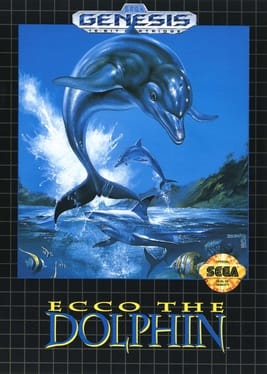
In case you wondered where 'Ecco the Dolphin' came from.

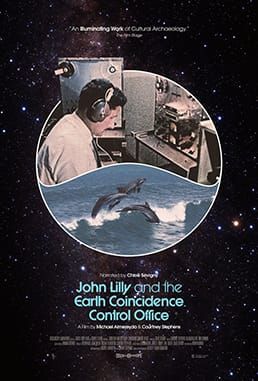
Directed by Michael Almereyda and Courtney Stephens and narrated by Chloë Sevigny, John Lilly and the Earth Coincidence Control Office follows the life and work of John C. Lilly, cetacean scientist turned drug-induced New Age guru. Visit the tale of the man behind sensory-deprivation tanks, who helped bring dolphins and whales to the attention of the mainstream, and did a lot of drugs along the way.
The film paints a portrait of an obsessive scientist working in a cruel milieu only eventually tempered by an environmental movement he inadvertently helped inspire: mainly, by positing that whales and dolphins may be as intelligent as humans or even more so. Lilly's intellectual interest in dolphins comes across as sincere, but strangely hollow and abusive at a time when such abuse was the norm in scientific settings. The cruelty may not have been the point, but it stands out as Lilly shifts away from direct dolphin research to human experimentation, largely on himself.
Along the way, Lilly crosses paths with space scientist Carl Sagan, cult film director Alejandro Jodorowsky (who speaks on Lilly's role as a thought leader in psychedelic spirituality), and beat poet Allen Ginsberg. Also on offer are clips from films like Day of the Dolphin and Altered States, as well as the video game Ecco the Dolphin, all of which are inspired to some degree by Lilly's body of work.
In short, John Lilly and the Earth Coincidence Control Office is a documentary about a pioneer of psychedelia that is, in turn, a trip in its own right. Call it an acid doc. The idea of the "Earth Coincidence Control Office" (or ECCO) receives only brief mention in the film, but ECCO ties together Lilly's worldview as one of layers upon layers of reality that drugs, isolation, and metaphysical exploration can peel away or see through.
The film embraces a robust, dry wit; neither dispassionate nor histrionic, the film is the epitome of post-nineties Tarantino cool in documentary form. At RogerEbert.com, Clint Worthington remarks that the film's "consistent tone is hypnotic in its own way", pointing to a "curious, immersive feeling, one that helps you get into the mind of a man like Lilly". Worthington suggests "the appeal of [Lilly's] ideas becomes clear in his cultural footprint", which the film argues looms larger than most people would know.
Coincidentally, co-director Michael Almereyda helmed one of my favorite Shakespearean twists, the 2000 Ethan Hawke-starring Hamlet, which features prominently in the early moments of another newly released documentary, Alex Ross Perry's Videoheaven. In this film, Maya Hawke narrates over her father's famous "to be or not to be" rendition, which, in Almereyda's marriage of Shakespearean language and cutting age modernity, takes place in a Blockbuster Video. Maya Hawke suggests of Hamlet that "He has infinite choices, in life and here at the video store, of movies to rent. But he cannot make a decision. The video store is a place of hope and anxiety about the future. It is a place where people pass from one condition into another, where their minds wander at the same pace as their bodies".
In a sense, the video store is to Hamlet as the isolation tank is to John Lilly: an experiential mode of expanding consciousness.